

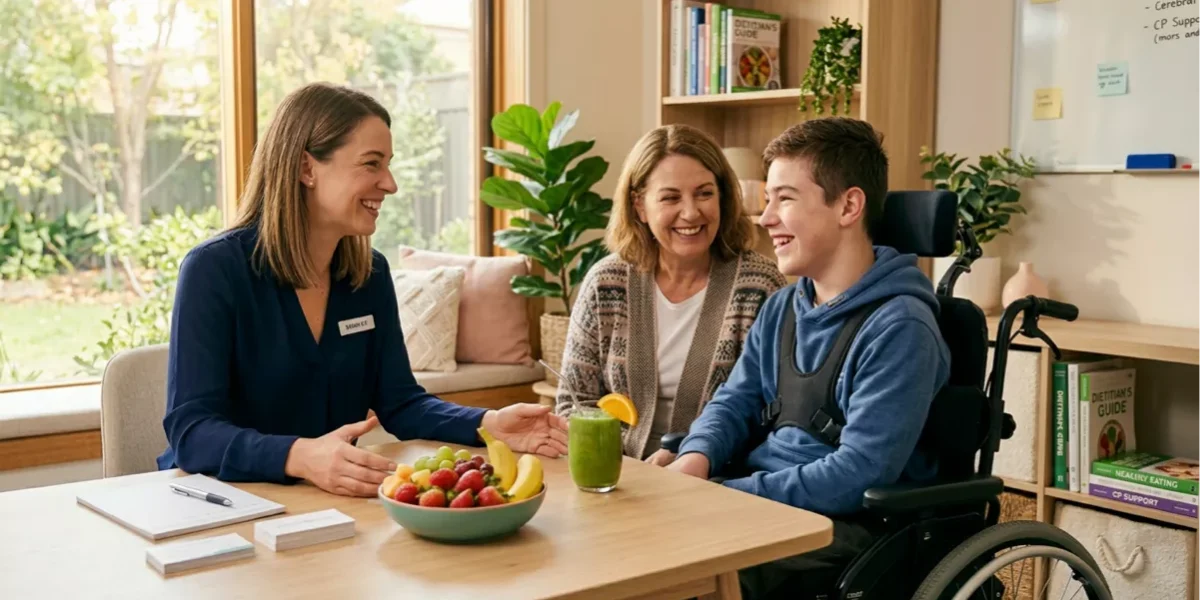
For many people living with cerebral palsy, food and nutrition can feel like just one more thing that is harder than it should be.
Eating may take longer. Fatigue can make meal preparation difficult. Swallowing difficulties can create anxiety around mealtimes. Maintaining weight can become a constant challenge.
Constipation, reflux, low appetite, mobility limitations and dependence on others for food preparation can all add extra layers of complexity to everyday life.
At Optimum Intake Dietitians, we understand that nutrition support for people living with cerebral palsy goes far beyond calories, meal plans and healthy eating advice.
Our focus is helping people achieve greater independence, improve their health and wellbeing, and support meaningful participation in everyday life through practical, personalised nutrition care.
Understanding the Nutrition Challenges of Cerebral Palsy
Cerebral palsy affects everyone differently.
Some people experience mild physical challenges, while others require significant daily support. Because cerebral palsy can impact movement, muscle control, posture, communication, mobility and swallowing, nutrition needs are often unique and highly individual.
Some of the nutrition-related challenges we commonly see include:
- Difficulty chewing or swallowing food and fluids
- Fatigue during meals
- Increased energy requirements from muscle spasticity
- Unintentional weight loss
- Difficulty maintaining adequate nutrition intake
- Gastrointestinal concerns such as constipation or reflux
- Reliance on carers or support workers for meal preparation
- Reduced opportunities for community participation around food
- Challenges accessing suitable foods and nutrition products
- Tube feeding or oral nutrition supplement requirements
- Difficulty grocery shopping and preparing meals independently
These challenges can have a significant impact on health, energy levels, confidence, social participation and overall quality of life.
When Nutrition Becomes About More Than Food
Many people living with cerebral palsy tell us they feel exhausted.
Simple daily tasks often require significantly more physical effort than they do for others. When nutrition needs are not being met, this can contribute to:
- Reduced energy levels
- Poor concentration
- Slower recovery from illness
- Reduced muscle strength
- Increased fatigue
Difficulty participating in work, education or social activities
Increased reliance on support networks
Food is fuel for daily living.
Having the right nutrition support in place can help optimise health, maintain strength, support functional capacity and improve overall wellbeing.
How a Disability Dietitian Can Help
Our disability dietitians work collaboratively with participants, families, support workers and multidisciplinary teams to create practical strategies that fit real life. Our approach aligns with participant-centred care, choice and control, and meaningful functional outcomes.
Support may include:
Comprehensive Nutrition Assessment
Before making recommendations, we take the time to get to know the whole person, not just their diagnosis.
Our assessments explore nutritional intake, weight history, medical conditions, feeding and swallowing concerns, gastrointestinal symptoms, mobility, physical function, daily routines, support requirements and current health goals. We also spend time understanding the participant’s interests, hobbies, social activities, living situation, cultural background, food preferences and the people who support them each day.
We want to understand what a meaningful and fulfilling life looks like for each individual.
Whether that is having enough energy to attend school or work, participating in sport and recreation, increasing independence with meal preparation, improving comfort at mealtimes, managing tube feeding, reducing constipation, maintaining a healthy weight, or simply enjoying food with family and friends.
We also consider the practical realities of everyday life, including access to food, meal preparation skills, support worker involvement, equipment needs, financial considerations and environmental factors that may impact nutrition. This comprehensive approach allows us to develop personalised recommendations that are realistic, achievable and aligned with the participant’s goals, preferences and support needs.
By understanding the whole picture, we can create nutrition strategies that support not only physical health, but also participation, independence, confidence, wellbeing and quality of life.
Weight Management Support
For some people, maintaining weight can be difficult.
For others, reduced mobility or changes in activity levels can make weight management more challenging.
We provide realistic, non-restrictive and personalised support that considers individual goals, health conditions and quality of life.
Meal Planning and Practical Food Skills
Nutrition advice needs to work in the real world.
Our team can provide practical support with:
- Meal planning
- Budget-friendly food choices
- Grocery shopping skills
- Food label reading
- Cooking and food preparation
- Building confidence and independence around food
We offer practical food-based sessions designed to develop lifelong skills and confidence in everyday environments.
Home Visits, Clinic Appointments and Telehealth
Everyone’s circumstances are different.
That’s why we offer flexibility in how services are delivered. Appointments can occur in our clinics, in participants’ homes, through telehealth, during supermarket visits or within community settings where meaningful learning can occur. This helps improve accessibility, engagement and choice.
Support Worker and Carer Training
Many support workers assist with shopping, meal preparation and mealtime support without formal nutrition training.
Our team can provide education and practical training to improve confidence, consistency and understanding of nutrition recommendations. This helps create lasting outcomes that continue beyond the dietitian appointment itself.
Oral Nutrition Supplements and Tube Feeding Support
Some people living with cerebral palsy may require additional nutritional support through oral nutrition supplements or enteral feeding.
Our dietitians have extensive experience supporting clients with supplement trials, tube feeding management, equipment coordination, supplier liaison and ongoing nutrition monitoring.
NDIS Reports and Funding Advocacy
We understand the importance of clear, evidence-based NDIS reporting.
Our disability dietitians are experienced in preparing reports that communicate nutritional needs, functional impacts and recommendations in a way that supports participant goals and funding discussions.
Why Families, Support Coordinators and Participants Choose Optimum Intake Dietitians
Since 2007, Optimum Intake Dietitians has been supporting individuals across the Central Coast, Newcastle, Hunter and surrounding regions.
Our disability team combines clinical expertise with practical, person-centred support. We recognise that every participant has different abilities, goals, preferences and aspirations.
Rather than applying a one-size-fits-all approach, we tailor our services to suit the individual, their support network and their daily environment.
We are committed to:
- Choice and control
- Evidence-informed practice
- Inclusive and accessible services
- Collaborative care
- Functional outcomes
- Practical and realistic recommendations
- Supporting independence wherever possible
Most importantly, we take the time to understand the person behind the diagnosis.
Looking for a Dietitian Experienced in Cerebral Palsy?
Whether you are a participant, parent, carer, support coordinator, support worker or health professional, our disability dietitians can help.
We provide NDIS dietitian services for children, adolescents and adults living with cerebral palsy and other physical disabilities.
Together, we can create practical nutrition strategies that support health, wellbeing, independence and participation in the activities that matter most to you.
Contact Optimum Intake Dietitians to learn more about our disability nutrition services across the Central Coast, Newcastle, Hunter region and via telehealth Australia-wide.